


Putting People First: How Rosendin Is Redefining Safety Through SIF Prevention (Part II)
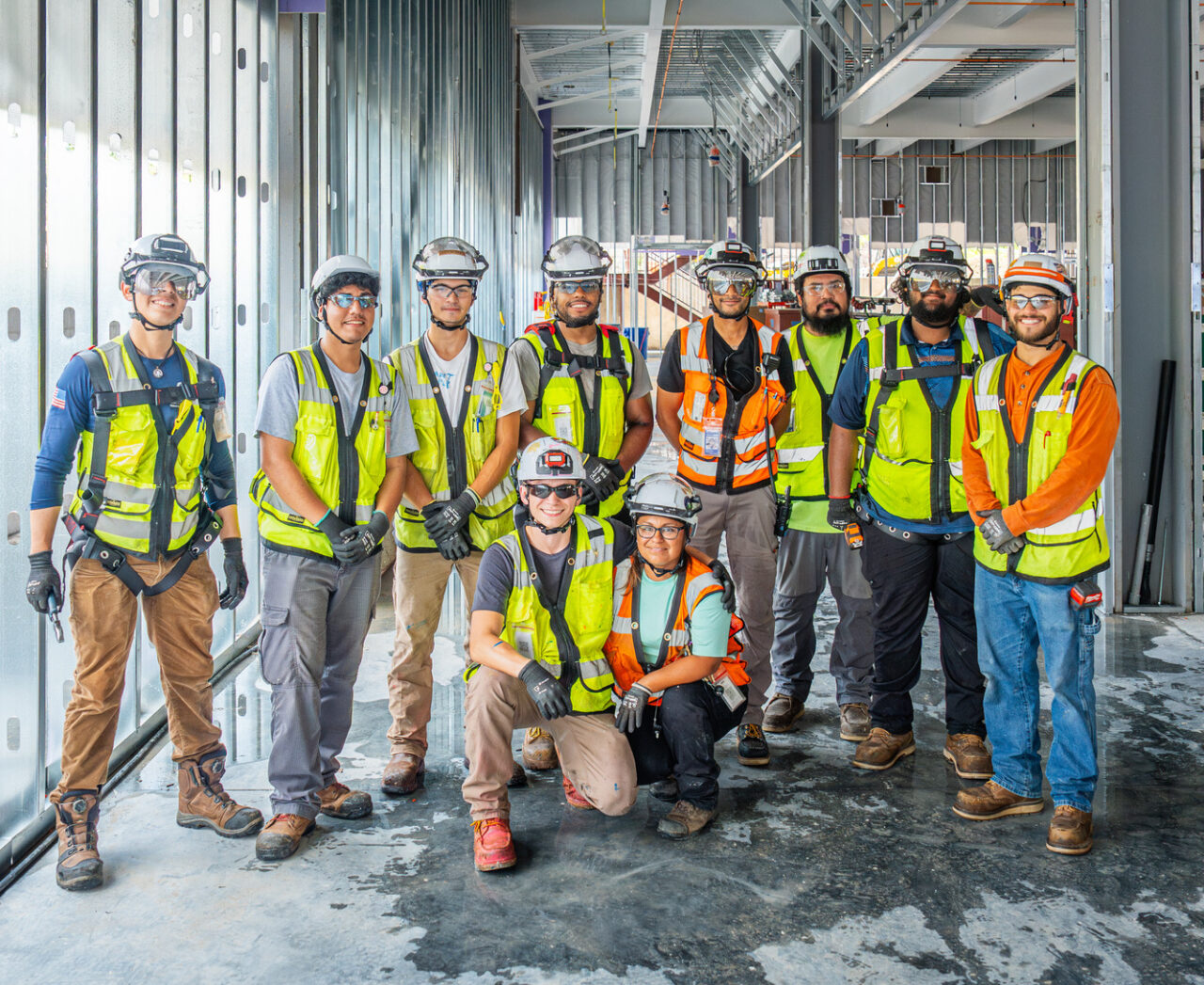
One of the defining characteristics of Rosendin’s safety culture is the depth of trade experience across its leadership team. Both company presidents are proud IBEW electricians, and Scott, along with other senior leaders, shares that same foundation. Having started in the field and carried that experience into leadership, they bring a level of credibility that shapes the way safety is discussed, reinforced, and continuously improved across the company.
When leaders walk onto a jobsite, they are not viewed as outsiders focused only on compliance. They are people who have done the work themselves, faced many of the same risks, and understand what it means to rely on training, preparation, and the crew around you. That shared background helps create more honest conversations on site and opens the door to meaningful feedback from the people doing the work every day.
“A lot of our leaders have very similar stories. They tooled up, they went through an apprenticeship. When we get to go out on the jobsite and say, what are we getting right and what are we getting wrong, how can we improve, how can we help you, what do you need from us, we get real feedback. Real conversations that lead to real improvements.” –Scott Risch, Sr. Vice President, Health, Safety & Environmental
Rosendin’s safety culture is also reflected in the way the company measures progress. In 2025, Rosendin worked 24 million labor hours, nearly 10 million more than in 2024, driven by roughly 40 percent growth in each of those years. Across both years, the company recorded zero fatalities. While that is meaningful, Scott is careful not to treat it as the finish line. In his view, zero fatalities should be the baseline expectation for a company operating at Rosendin’s level.
The numbers he points to with the most pride are the ones that offer a deeper look at what workers are actually experiencing on the job. Rosendin developed an internal severity matrix based on lost-time and restricted-duty days to better measure the impact of incidents that do occur. For the past two years, Rosendin had double digit reduction, year over year, in the number of serious incidents. Serious incidents have been reduced 45% since 2023. And we have reduced the severity of incidents over the same time period by 42%.
“In ‘24 that went down, and in ‘25 that went down, and I’m not talking about one or two percent. I’m talking double-digit percentages. Significant reductions year over year in both the number of serious incidents and the severity of incidents. We’re extremely proud of that.” –Scott Risch
What makes those reductions especially notable is that they happened during a period of major growth. Rosendin has been scaling quickly, which means bringing large numbers of new people into its culture while maintaining clear expectations around safety. Seeing severity metrics improve while the company expanded at that pace reflects the consistency of the culture leadership has worked hard to build.
A big part of that culture is trust. When people feel comfortable speaking up about a near miss or reporting something that may seem minor, the company gains information it can learn from before something more serious happens.
“There is a high degree of trust when you can go to your boss and tell them something that seems extremely insignificant, maybe even a little embarrassing, and realize that you’re not going to get in trouble. We truly want to look at every incident and say, ‘How can we get better? How can we take care of our people a little bit more?’ That’s the culture that’s being created by our people at Rosendin.” –Scott Risch
The Path Ahead
SIF prevention is a long-term effort. It will take years of sustained effort for a preventive approach to SIF to become widely adopted across the construction industry, but Rosendin is not waiting for the rest of the industry to catch up. The work is already in motion, from the planning tools being redesigned with field supervision, to the ongoing collaboration with the National Safety Council, to the daily expectations that every leader at every level of the company holds for the people in their care.
Scott is clear about his own role in all of it. He did not build the culture at Rosendin. He joined it, and his job is to contribute to it and help it grow.
“It’s a company that was built by people for people, and is being led by those people. We get to respond to the things that mean the most to us, which is taking care of our people.” –Scott Risch
That is the foundation upon which Rosendin is building. Every person is part of a larger story; never just a number in it. Each one has a name, a family, and people counting on them, and each one deserves to be cared for every day on the jobsite. Not as a slogan. As the standard.