



Putting People First: How Rosendin Is Redefining Safety Through SIF Prevention
Rosendin is focused on what gets prevented.
At Rosendin, safety is a core value woven into the company’s culture and reflected every day by the people who carry it forward on jobsites across the country. For a company that has been building since 1919 and today includes more than 12,000 employees, that commitment is both a point of pride and a responsibility that continues to matter every day.
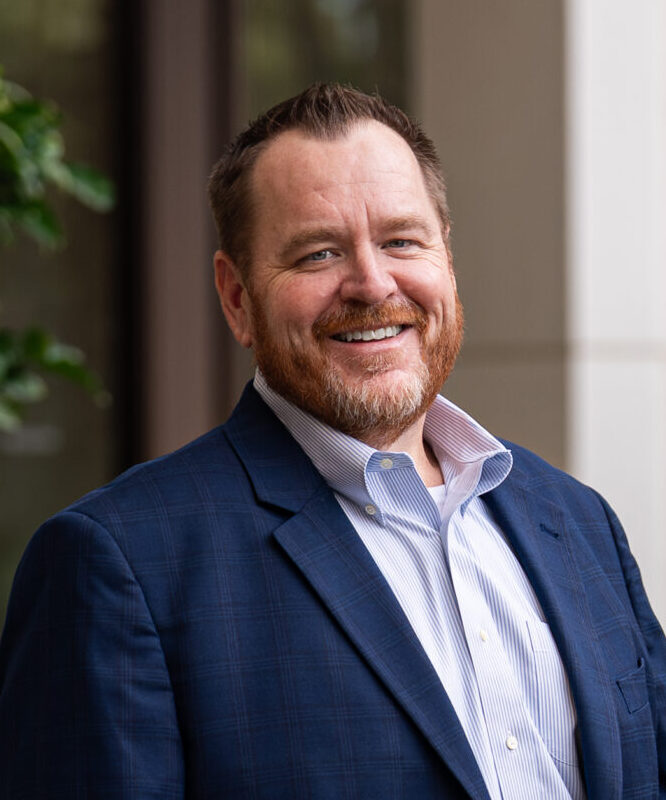 Scott Risch, Rosendin’s Senior Vice President of Health, Safety & Environmental (HSE), assumed that responsibility through the trade itself. He is a career electrician, a master license holder, and a proud member of IBEW Local 369. Years in the field continue to shape the way he views safety today, giving him a firsthand understanding of the realities people face on the job and influencing his approach to safety leadership at Rosendin.
The initiative at the center of his focus right now is one he believes could reshape how the entire construction industry approaches risk: Serious Injury and Fatality (SIF) prevention.
A Flaw in the Foundation
For decades, the construction industry has measured safety through the lens of incident rates. The idea is straightforward: the fewer recordable incidents a company logs, the safer it must be. And for years, those rates have been trending downward across the industry. However, as incident rates have fallen, fatalities and severe injuries have not followed. The two metrics are actually moving apart, and that disconnect is at the heart of Rosendin’s safety strategy.
Scott describes the issue plainly. Traditional metrics do not factor the severity of an event into how it is counted. A minor recordable incident and a fatality are treated as equivalent data points.
“The metrics don’t get it right. A fatality counts the exact same way as three stitches do under traditional reporting. It’s wrong in every aspect.”
Working alongside the National Safety Council, Rosendin is helping to drive alignment, with the goal of shifting the entire construction industry from a framework built around reporting to one built around SIF prevention.
Rosendin’s SIF Prevention Strategy
Rosendin has made SIF prevention the centerpiece of a broader rebuild of its safety strategy. A major part of that effort involves reworking the company’s pre-task planning process from the ground up so that SIF prevention is built into how jobs are planned before the first worker steps onto the site.
For years, the standard planning process was relatively straightforward: identify the hazards, build the work plan, communicate it to the team, and get to work. That approach relied heavily on trained, experienced workers to recognize risk and apply the right safeguards, and for a long time, it served the industry well. But the labor environment has changed. High demand across the industry and shorter project timelines have made thoughtful, proactive planning more important than ever.
“We’re in the process of changing how we plan our work to make sure that the safeguards are communicated and that we actually verify those safeguards have been put in place, as opposed to just saying, ‘here’s the plan, get to work.’”
The distinction Scott draws between communication and verification is significant. Communicating a hazard and confirming that the appropriate safeguards are physically in place before work begins are two different things. Rosendin’s updated planning process is being designed to ensure both happen consistently across every job the company runs.
To develop the new planning tools, Rosendin brought field supervision directly into the process by hosting a workshop with the teams who are on jobsites every day. The intent was to build something that actually works in the field, not just something that satisfies a safety checklist.
“It’s their tool, so we need them to help us develop it. We know what the minimum requirements are that need to go into the plan, but we also need to understand what they want on that plan that makes it work for them.”